Solar control blinds, blinds options for conservatories and sunrooms
Choosing window coverings for a conservatory or sunroom is not quite like choosing them for a standard room. The main reason is the sheer amount of glass. Walls made mostly of windows and glass doors mean the space heats up fast when the sun is out and can lose warmth just as quickly on colder days. The right blinds need to manage both problems at once: keeping the room comfortable without blocking all the daylight that makes these spaces enjoyable in the first place.
Many people start by looking at fabric blinds, but the range of materials, linings and operating systems can feel overwhelming. The goal is to match the window covering to the specific sun exposure the room gets. A south facing window receives intense direct light for hours, while a north-facing one gets a softer, more even light. The same blind that works perfectly on one side of the house can leave a south-facing conservatory uncomfortably hot by midday.
Understanding solar heat and how blinds help
Sunlight enters a room in two ways. Visible light is what we see and what makes a space feel bright. Infrared radiation is what we feel as heat. Most of the solar heat that builds up inside a conservatory comes from that infrared radiation passing straight through the glass. Once inside, it warms the surfaces it strikes, and those surfaces then warm the air temperature of the room.
Blinds reduce this heat gain in two ways. They reflect a portion of the radiation back out through the glass before it becomes heat inside the room. They also absorb some of the energy and hold it away from the room's interior. Reflective fabric is especially good at the first job. A white or pale backing on the material bounces sunlight back, which is why many solar control blinds have a white side facing the glass. The fabric itself may also be a mesh or a coated material that cuts down the amount of radiation that passes through.
But blocking heat is only half the picture. On a cold winter evening, the same glass that let heat in during the day now lets it out. A blind with a thermal lining can slow that heat loss significantly. The lining traps a layer of air between the blind and the glass, and that still air acts as insulation. So a single blind design can serve two roles: cooling in summer and insulating in winter.
Types of blinds commonly used in conservatories
There are several styles that work well in these spaces, and each has its own strengths and drawbacks.
Roller blinds
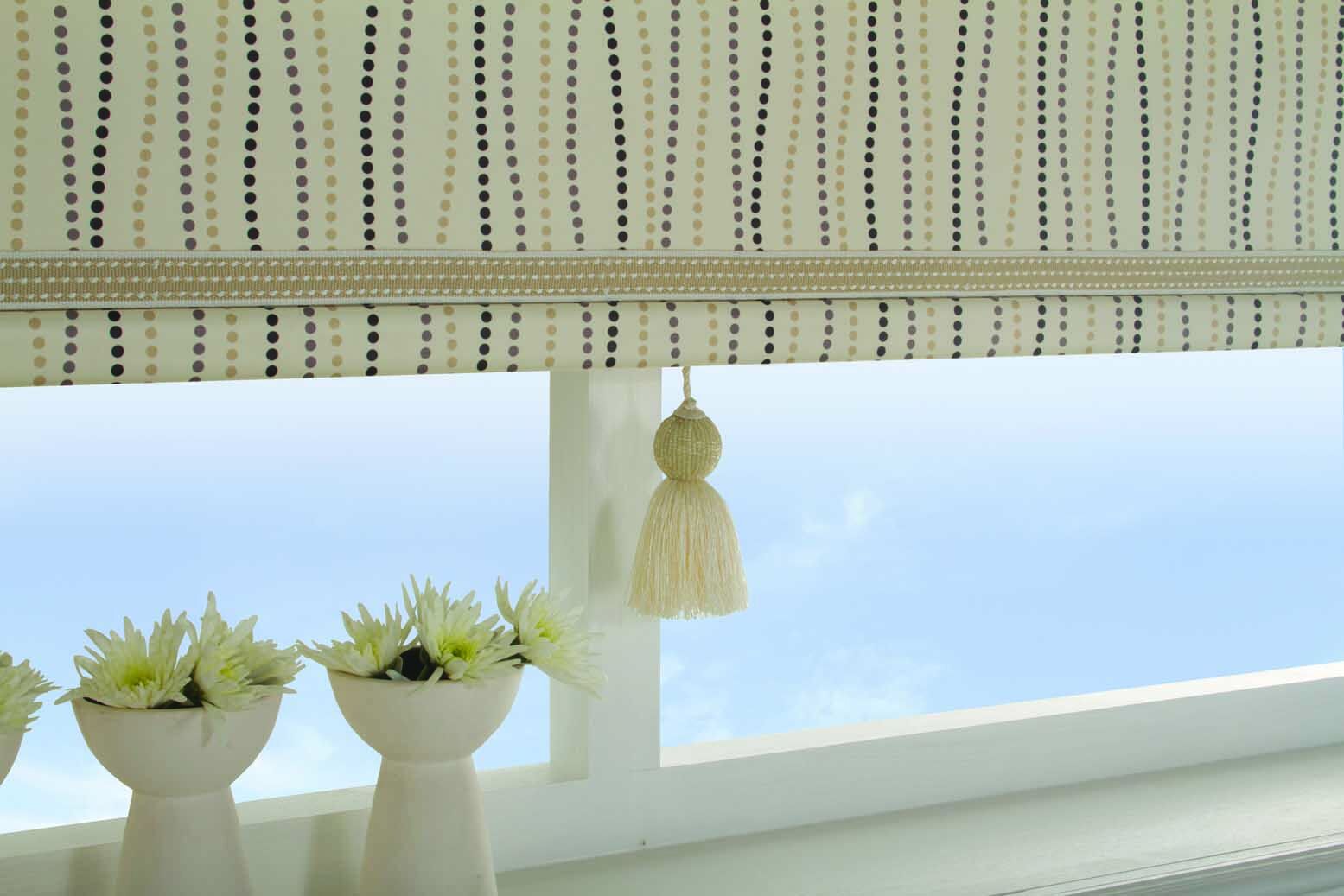
Roller blinds are a straightforward choice. A single piece of fabric rolls up from the bottom or down from the top. They can be made with solar control fabric that blocks a high percentage of UV rays and reduces glare without turning the room dark. For a conservatory that gets strong afternoon sun, a roller blind with a reflective backing can make a noticeable difference to the indoor temperature. The main limitation is that they offer only one position: fully up, fully down, or somewhere in between. If you want light from above but shade below, you cannot adjust the top and bottom independently.
Pinoleum blinds
Pinoleum blinds are made from tightly woven natural or synthetic reeds. They have a distinct look that suits traditional or rustic conservatories. The weave creates tiny gaps that let some light through while cutting glare. They are not as effective at reflecting solar heat as a coated fabric, but they do provide good privacy and a soft, warm appearance. They work best on windows that do not get the full force of midday sun.
Pleated blinds
Pleated blinds are made from a single piece of fabric that is folded into neat pleats. They can be installed as a single unit or as a two-section system that lets you open the top and bottom separately. This dual option is useful for a conservatory where you want to let light in through the upper part of the window while keeping the lower part private. Pleated blinds are available with solar control coatings and with thermal linings, so they can be a good all-round choice.
When to choose reflective fabric over a thermal lining
The decision often comes down to which side of the glass the room's biggest problem lies. If the room faces south or west and gets direct sun for more than a few hours a day, reflective fabric is likely to make the biggest difference. It stops heat before it builds up. A blind with a white or silver backing can cut the amount of solar heat entering the room by a large margin.
If the room is used mostly in the morning or in winter, a thermal lining may be more valuable. It keeps the warmth inside when the outside temperature drops. Some blinds combine both features: a reflective outer face and a thermal lining on the back. These are often labelled as solar control blinds and are designed specifically for rooms with large glass areas.

It is also worth thinking about glare. Even on a cloudy day, a bright sky can make it hard to see a television screen or read a book. A blind with a medium opacity fabric will soften the light without making the room feel dark. For a home office in a conservatory, that balance is especially important.
Practical considerations for installation and use
Conservatory windows are often non-standard sizes. They may be wider, taller or shaped differently than the windows in the rest of the house. That is one reason why made-to-measure blinds are common in these spaces. A blind that is exactly the right size will sit neatly within the window frame, leaving no gaps for light to leak around the edges. Some people prefer a blind that fits inside the recess, while others choose one that mounts on the frame itself. Both approaches work, but the inside fit tends to look cleaner and blocks more light.
Another factor is the operating system. A conservatory may have windows that are difficult to reach, especially if they are high up or behind furniture. A manual pull cord works well for most windows, but for very tall windows a geared system or a motorised option can make life easier. Motorised blinds can be controlled by a remote or a switch, which is handy when the window is above a sofa or a worktop.
Cleaning is also worth considering. Blinds in a conservatory collect dust and pollen from the garden. Fabric blinds can be dusted with a soft brush or wiped with a damp cloth, but some materials are more forgiving than others. Roller blinds and pleated blinds are relatively easy to maintain. Pinoleum blinds need a little more care because dust can get trapped in the weave.
It is also true that the blinds you choose will affect the overall look of the room. A conservatory is often a space where you want to feel connected to the garden, so heavy curtains or dark blinds can make it feel closed in. Light-coloured fabrics in a shade that complements the outdoor greenery usually work well. A pale grey, cream or soft green keeps the room feeling airy.
For those who want maximum flexibility, a combination of blinds can be the answer. A reflective roller blind for the roof windows and a pleated blind for the side windows gives you control over the light from different angles. Some people also layer a sheer blind with a blackout blind, using the sheer during the day and the blackout at night. The key is to think about how the room is used at different times of day and in different seasons.
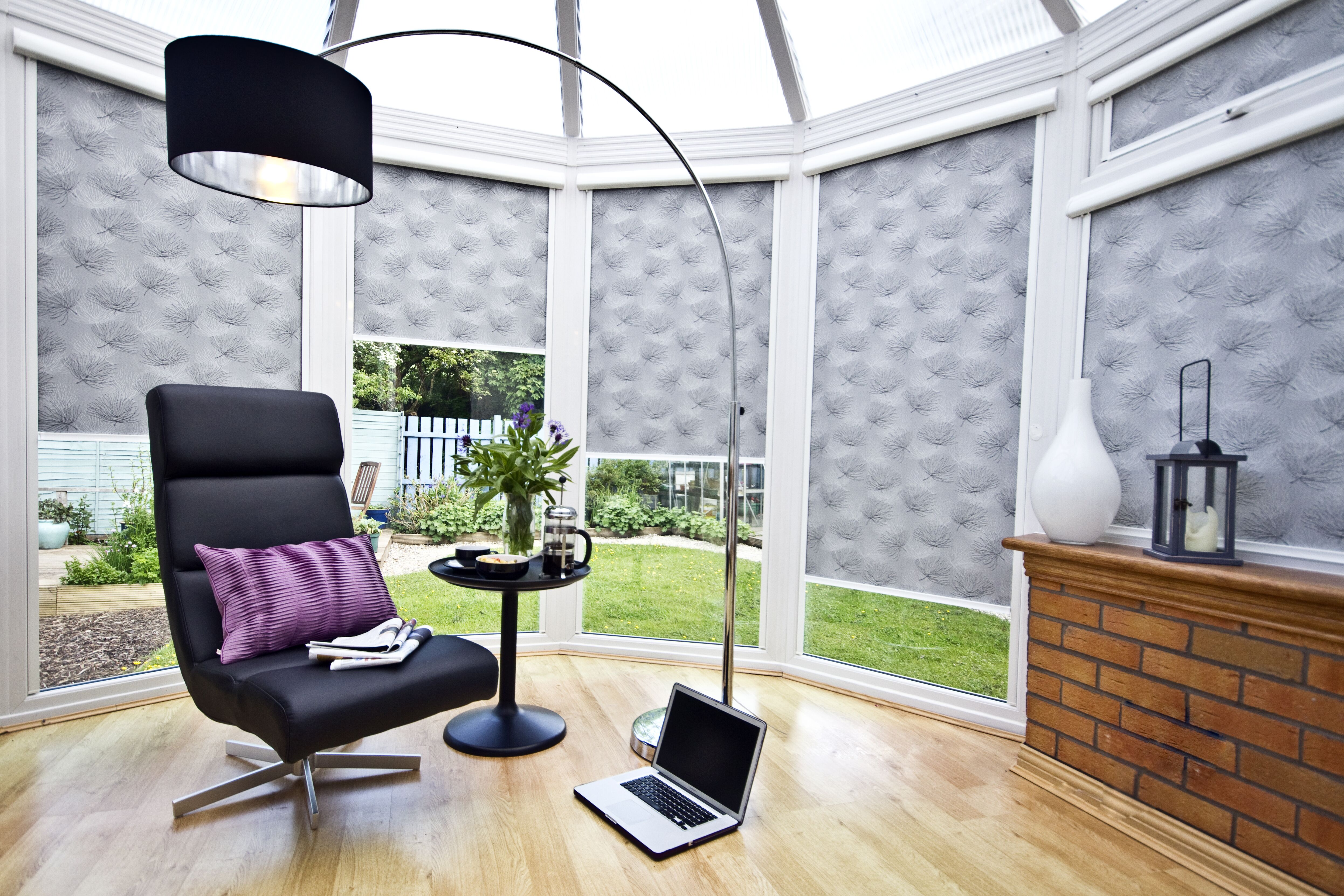
One option that has become popular in recent years is the use of fitted window blinds that are tailored exactly to the window dimensions. This ensures a precise fit and a clean finish, which matters in a room where the windows are a major visual feature. A well-fitted blind sits flush against the glass, leaving no gaps for light or heat to escape. That level of fit is hard to achieve with off-the-shelf blinds, especially in a conservatory where the windows are often an unusual shape.
When you are comparing options, it helps to start with the direction the windows face. A south-facing conservatory will benefit most from a reflective fabric that keeps the heat out. A north-facing room might be better served by a thermal lining that holds warmth in. If the room faces east, the morning sun can be intense, but the afternoon is cooler. A medium-opacity blind that you can adjust easily might be the best fit.
Finally, remember that the windows themselves may also need attention. If the glass is single-glazed or the frames are draughty, no blind will fully solve the temperature problem. In that case, improving the glazing or sealing the frames first will make the blinds more effective. But for most modern conservatories with double glazing, the right blind can make the room comfortable all year round. The choice comes down to how much sun the room gets, how you use the space, and whether heat gain or heat loss is the bigger issue. Fitted window blinds that match the window shape and your daily routine will give the best result, turning a glass room into a room you can actually enjoy.